Mostrar mensagens com a etiqueta Willian Blake. Mostrar todas as mensagens

20.2.07

Os trovões terríveis rasgaram O meu manto virgem em dois

Visions of the Daughters of Albion
Frontispiece Copy D (1795)

Pois a alma doce da América, Oothoon, vagueava cheia
de mágoa,
Ao longo dos vales de Leutha em busca de flores que
a consolassem;
E foi assim que ela falou ao luminoso Malmequer do vale
de Leutha:

"Serás uma flor? Serás uma ninfa? Vejo-te ora flor;
Ora ninga! Não me atrevo a arrancar-te do teu leito
orvalhado!"

A ninfa Dourada respondeu: " Colhe a minha flor,
meiga Oothoon,
Outra flor nascerá, pois a alma de doce deleite
Jamais morrerá." Calou-se & fechou o seu templo
dourado.

Oothoon colheu então a flor dizendo: " Arranco-te do teu leito,
Doce flor, e pouso-te aqui para cintilares entre os meus seios
E assim viro o rosto para onde toda a minha alma almeja."

Sobre as ondas, partiu ela em ágil exultante deleite alado;
E sobre o reino de Theotormon, tomou o seu curso impetuoso.

Bromion dilacerou-a com os seus trovões, no seu leito
tempestuoso
Deitou a pálida donzela, e logo as mágoas dela aterraram os
seus roucos trovões.

Bromion falou: "Contemplai esta prostituta aqui no leito de
Bromion,
E deixai os zelosos golfinhos folgar em redor da bela donzela;
(...)
Agora podes casar com a prostituta de Bromion, e proteger o
filho
da fúria de Bromion, que Oothoon dará à luz daqui a nove
luas."


William Blake
in "Quatro Visões Memoráveis",
Visões das Filhas de Albion,
pp 53-55


Oothon é a figura central da obra Visões das Filhas de Albion, representando o amor frustrado. É violada por Bromion quando se dirigia ao encontro do amado Theotormon. Defende a pureza essencial do amor e do sexo, denunciando a repressão introduzida por Urizen.

No mundo Blake

Compreender a mitologia de William Blake não é fácil. Fiz uma pesquisa na net e descobri na Tate Learning, um capítulo sobre as principais Personagens.

PS: Blake's London - para quem quiser saber como se promove o turismo cultural.

Newton - personificação do homem limitado pela razão

Willian Blake

Personification of Man Limited by Reason

The eighteenth-century poet, Alexander Pope, wrote a satirical epitaph for Newton: 'Nature and Nature's laws lay hid in night/God said Let Newton be! And all was light'. This shows just how much the eighteenth century revered the great philosopher. Newton had successfully explained the workings of the physical universe. To Blake, however, this was not enough: Newton had omitted God, as well as all those significant emotional and spiritual elements which cannot be quantified, from his theories. Blake boasted that he had 'fourfold vision' while Newton with his 'single vision' was as good as asleep. To Blake, Newton, Bacon and Locke with their emphasis on reason were nothing more than 'the three great teachers of atheism, or Satan's Doctrine'.

In this print from 1795 Newton is portrayed drawing with a pair of compasses. Compasses were a traditional symbol of God, 'architect of the universe', but notice how the picture progresses from exuberance and colour on the left, to sterility and blackness on the right. In Blake's view Newton brings not light, but night.

Los - anagrama de sol, é a poesia, expressão da imaginação criativa

Willian Blake

Personification of the Creative Imagination

This picture, the 100th and final plate from Jerusalem, shows Los (the middle figure) in the pose of the Apollo Belvedere. He is holding a hammer in his right hand, and a pair of tongs in his left.

In Blake's mythology Los represents the imagination, and corresponds to the loving and forgiving Christ of the New Testament. (As opposed to Urizen who, according to Blake, is the vengeful and repressive God of the Old Testament). Los often appears as a blacksmith with the tools of his trade. Blake sees Los crafting objects from molten metal, as he himself forged his visions and inspirations into poetry and art.

In the Songs of Experience, 'The Tyger' is created with the blacksmith's implements of hammer, anvil, chain and furnace. 'The Tyger' is often interpreted as a symbol of man's irrepressible urge to create. Could it be Los then who 'framed' (made) the Tiger?

The name 'Los' may derive from the word 'loss', alluding to fallen man's having 'lost' Paradise. It may, however, be a reversal of the Latin word 'Sol' (sun), since Los is shown creating the sun on plate 73 of Jerusalem.

On the right of the picture is Enitharmon, Los's wife. To Blake, she represents misguided religion based on chastity and vengeance. Their offspring is Orc, the symbol of revolution.

Albion - nome profético de Inglaterra

This picture, the thirty-seventh plate of Jerusalem, shows Albion in despair. Albion is a poetic name for England. Derived from the Latin adjective 'albus' (white) it refers to the white cliffs of Dover.

Albion is occasionally presented as a vigorous and joyful figure (as in the 1793 picture Glad Day where, inspired by newly-independent America and revolutionary France, England has become aware that freedom through revolution is possible), but he is most often depicted sleeping, suffering or in despair.

In the prophetic book Milton Albion is asleep, 'heavy and dull' until Blake and Milton awaken his revolutionary fervour, while Jerusalem tells the story of the regeneration of Albion from harshness and cruelty.

Urizen - ecoa "your reason" e "horizon"

Personification of Reason, Repression and Authority There are two possible derivations of the name Urizen. It comes either from 'Your Reason' (meaning 'accepted wisdom' - accepted by everyone, but not by Blake), or from the Greek verb 'horizein', meaning 'to limit'. Urizen is always represented as a bearded old man. Sometimes he bears books of divine law, sometimes measuring instruments (with which to create, but also limit the universe). Urizen is the God of the Old Testament who, in alliance with kings and priests, creates 'nets of religion'. With these nets (on which he is resting his elbows in this picture), he keeps the people down. He uses them to restrain their yearning for freedom and justice (as in 'The Chimney Sweeper') and to suppress their sexual desire (as in 'The Garden of Love'). Urizen is therefore in conflict with Orc, the revolutionary spirit, and with Luvah, the Prince of Love.

16.2.07

Ilustração de William Blake
A Criação de Adão

Não há religião natural

I
As percepções do Homem não estão limitadas aos orgãos de percepção, ele apreende mais do que os sentidos (ainda que muito agudos) são capazes de descobrir.

II
A Razão, ou o rácio de tudo o que já conhecemos, não é a mesma que há-de ser quando conhecermos mais.

III
[falta]

IV
O que é limitado é desprezado pelo seu possuidor. A fastidiosa volta, até mesmo de um universo, depressa se tornaria um engenho com rodas complicadas.

V
Se muito se torna o mesmo que pouco quando possuído, Mais! Mais! é a exclamação de uma alma enganada; menos do que Tudo não satisfaz o Homem.

VI
Se alguém desejar o que é incapaz de possuir, o desespero há-de ser o seu eterno destino.

VII
Sendo o desejo do Homem Infinito, Infinita é a posse & ele próprio é infinito.

Conclusão
Se não fosse pelo carácter Poético ou Profético, o Filosófico & o Experimental seriam em breve o rácio de todas as coisas, & ver-se-iam paralisados, incapazes de fazer fosse o que fosse a não ser repetir a mesma volta fastidiosa uma e outra vez.

Aplicação
Sendo o desejo do Homem Infinito, Infinita é a posse & ele próprio é Infinito.


Por isso Deus vem a ser o que somos, para virmos a ser o que ele é.

William Blake, 1794
in Sete Livros Iluminados, livro dois, NÃO há RELIGIÃO NATURAL, série b
Tradução de Manuel Portela
Ed. Antígona, Julho 2005, pp 53-61

15.2.07

A criação do mundo é a escrita da criação do mundo

Conhecia "Primeiro Livro de Urizen", na versão de João Almeida Flor (Assírio & Alvim, 1983). Recentemente, a Antígona lançou "Quatro Visões Memoráveis" e "Sete Livros Iluminados" de William Blake, traduzidos por Manuel Portela.

Ilustração de William Blake
Adão e Eva

O primeiro inclui quatro livros originalmente gravados, impressos e iluminados entre 1790 e 1795: O Casamento do Céu e do Inferno, Visões das Filhas de Albion, O [Primeiro](e único) Livro de Urizen e O Livro de Ahania. O segundo constitui a primeira tradução portuguesa integral deste conjunto de poemas: Todas as religiões são uma só, Não há religião natural, O livro de Thel, América: uma profecia, Europa: uma profecia, A canção de Los e O livro de Los.

William Blake
Ilustração de A Canção de Los


William Blake foi poeta, pintor e tipógrafo. "Joseph Viscomi demonstrou que Blake gravava imagem e texto directamente sobre a placa de cobre e mais, que essa gravação não resultava da mera transferência de um modelo previamente acabado sobre papel.(...) Desde 1784 que Blake abrira a sua própria oficina de gravuras e se estabelecera profissionalmente, tendo realizado algumas dezenas de gravuras para editores de livros e gravuras. Tratava-se apenas de adaptar algumas dessas técnicas ao seu trabalho criativo, o que aconteceu por volta de 1788, quando o conceito de livro impresso iluminado começou a tomar forma na sua imaginação. Blake adopta a partir de então a gravura em água-forte para integrar figuração verbal e visual nos seus próprios livros. (...) Não menos importante é a possibilidade de reinvenção dos livros a cada nova edição...".[in "Sete Livros Iluminados", na Introdução - Oficina Gráfica & Forja Divina - A Gravura como Cosmogonia, de Manuel Portela]

A ideia do livro como arquétipo da criação do mundo transformou a sua oficina de gravuras em forja do universo.

UMA VISÃO MEMORÁVEL

Estava numa tipografia no Inferno & vi o método pelo qual
o conhecimento é transmitido de geração em geração.

Na primeira câmara estava um Homem-Dragão, a limpar os
desperdícios da boca da caverna; lá dentro, vários dragões
escavavam a caverna.

Na segunda câmara estava uma Víbora enroscada em redor do
rochedo & da caverna, e outros adornavam-na de ouro,
prata e perdras preciosas.

Na terceira câmara estava uma Águia com asas e penas de ar,
que tornava o interior da caverna infinito, à sua volta vários
homens Aquilinos construíam palácios nas falésias imensas.

Na quarta câmara estavam Leões de fogo ardente, rugindo &
derretendo os metais em fluidos vivos.

Na quinta câmara estavam formas Sem Nome, que moldavam os
metais na imensidão.

Aí eram recebidas por Homens que ocupavam a sexta câmara,
e tomavam a forma de livros & eram arrumados em
bibliotecas.

in "Quatro Visões Memoráveis", O Casamento do Céu e do Inferno,
pp 29-30
Ilustração de Willian Blake
O círculo da luxúria - Espíritos de Paolo e Francesca
in Inferno (V), Divina Comédia de Dante Alighieri


Dante desmaia após o relato de Francesca no segundo círculo onde as almas que pecaram por luxúria são agitadas como turbilhões de vento.

14.2.07

Songs of Innocence


Summary

The poem describes the annual Holy Thursday (Ascension Day) service in St Paul's Cathedral for the poor children of the London charity schools. The children enter the cathedral in strict order 'walking two and two' behind the beadles (wardens). The children sit and sing, and their voices rise up to heaven far above their aged guardians. The poem ends with a moral: have pity on those less fortunate than yourself, as they include angelic boys and girls like those described here.

Analysis

The poem is based on the contrast between the 'innocent faces' of the children and the authority of the 'grey headed beadles' and the other 'aged men' who act as their guardians. Although the children are made to enter the cathedral in regimented order, their angelic innocence overcomes all the constraints put upon them by authority - they even make the 'red and blue and green' of their school uniforms look like 'flowers of London town'. As the boys and girls raise their hands and their voices to heaven, the narrator imagines them rising up to heaven too, just as Christ himself did on Ascension Day. In the poet's vision they leave their 'wise Guardians' beneath them and become angels - which is why the last line tells us to 'cherish pity' and remember our duty to the poor. Although the triple repetition of 'multitude(s)' notes how many thousands of children live in poverty in London, the emphasis in this poem is on the 'radiance' which they bring to the church - they are 'multitudes of lambs'. We must wait for the contrary 'Holy Thursday' poem in Songs of Experience for Blake's social critique: 'And so many children poor? It is a land of poverty'.

ver o site Tate On Line

Songs


Ilustrações do próprio Willian Blake
Songs of Innocence, title-page, copy F, 1789
Songs of Experience, title-page, copy F, 1794

6.1.07

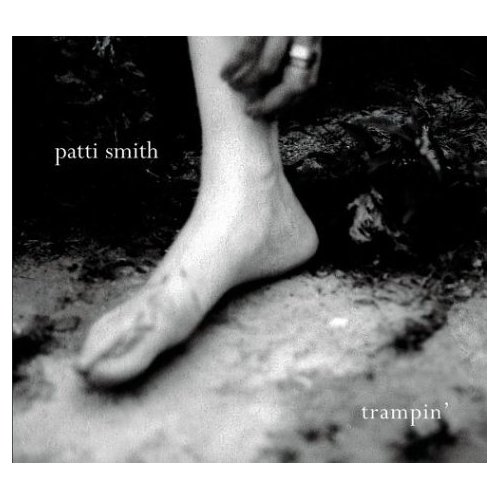
Patti Smith

... desesperadamente à procura de Trampin'!

greetings

our terrain stretches from the american
heartland to the streets of baghdad.
our boots are well worn and the sack we toss over
our shoulder is filled with tears and grain.
we unbutton our coats, for spring
is upon us and the air is thick with promise.
let us shake the gold upon the fields
for it is spring, a good time for trampin'.


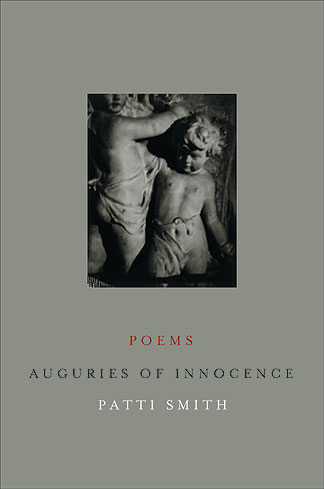
e depois o livro, como será? Em Auguries of Innocence, William Blake cantava
To see a world in a grain of sand
And a heaven in a wild flower,
/ Hold infinity in the palm of your hand
And eternity in an hour
.

Blake, 1757-1827. Smith, 1946-...

Como cantará Patti Smith? Devota da arte da poesia, amou Allen Ginsberg e William Burroughs, mas não esqueceu a tradição romântica de heróis como Robert Louis Stevenson, Rimbaud e William Blake. No lançamento do livro, Smith citou Blake para se descrever a si própria. Disse: "We contain multitudes. And we really do. So we have to look at all aspects of the human being."

Happy new year!